Transorbital surgery, or transorbital neuroendoscopic surgery (TONES), is a minimally invasive surgical approach in which an endoscope and specialised instruments are introduced through a small incision near the eye. This allows surgeons to access structures within the skull base and selected areas of the brain without the need for open cranial surgery.
Professor Lubbe is an internationally recognised pioneer in transorbital surgery and has co-authored a comprehensive guide to the technique.
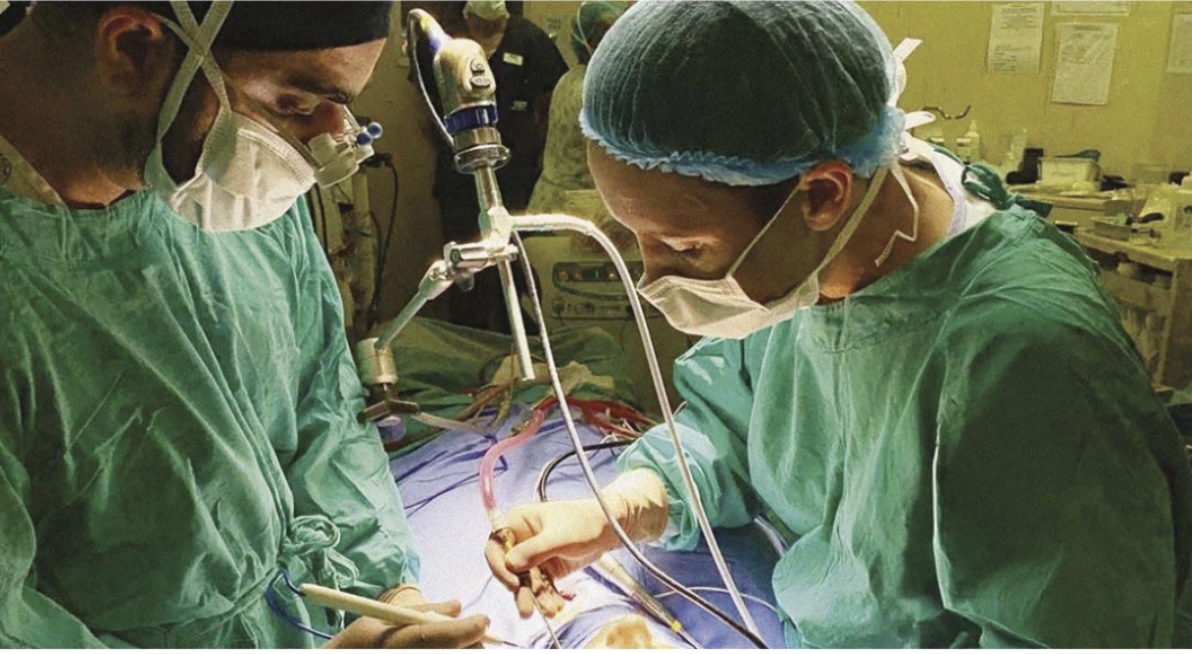
Professor Hamzah Mustak (left) and Professor Darlene Lubbe (right) performing endoscopic transorbital surgery.
Advantages of Transorbital Surgery
- Reduced tissue trauma compared with traditional open surgery
- Faster recovery
- Minimal visible scarring
- Lower risk of postoperative complications in appropriately selected patients
- Precise access to skull base structures
Conditions Treated
Sphenoid Wing Meningiomas
These slow-growing, usually non-cancerous tumours arise from the meninges covering the sphenoid wing, a bone at the base of the skull behind the eyes. The transorbital endoscopic approach offers direct, precise access while minimising disturbance to surrounding tissues.
Pituitary Tumours
Surgery to remove a pituitary tumour is advised when it places pressure on the optic nerve and affects eyesight, causes headaches or facial pain, or results in hormonal imbalance.
Thyroid Eye Disease (Graves’ Eye Disease)
An autoimmune condition that causes inflammation of the muscles and fatty tissue around the eyes, potentially resulting in protrusion of the eyes. Decompression surgery using a transorbital approach creates additional space behind the eye to relieve pressure.
Optic Nerve Decompression
Prof Lubbe performs optic nerve decompression using an endonasal approach (through the nose) or a multiportal approach (combining nasal and orbital access). This technique enables precise decompression of the medial aspect of the optic nerve — the portion closest to the nasal cavity — in cases where the nerve is under pressure due to traumatic injury or a tumour, such as a meningioma or orbital tumour.
Multidisciplinary Team
Transorbital surgery involves a multidisciplinary approach, bringing together expertise in ENT surgery, neurosurgery and ophthalmology. Professor Lubbe works closely with specialists including:
- Dr Byron de John — Neurosurgeon
- Prof Hamzah Mustak — Ophthalmologist
This collaboration brings together complementary expertise in the management of complex skull base and orbital conditions.